Unfolding on land and at sea, Wrigley Institute research spans all disciplines to find holistic solutions to our world’s most pressing environmental problems.
Education
We’re training the next generation of environmental changemakers through learning opportunities in Los Angeles, on Catalina Island, and beyond.
Engagement
Signature events spark meaningful, nonpartisan change to save our planet.
Our bachelor’s and master’s degree programs train students to view the environment with fresh eyes and develop novel, world-changing solutions to big problems.
Whether on USC’s main campus or at our one-of-a-kind marine lab on Catalina Island, interns and fellows pursue their passions with the support of funding, leading faculty, and dedicated staff.
Wrigley Institute research centers are leading the way in illuminating the state of our planet, solving its most pressing problems, and transforming the way society thinks and acts on the environment.
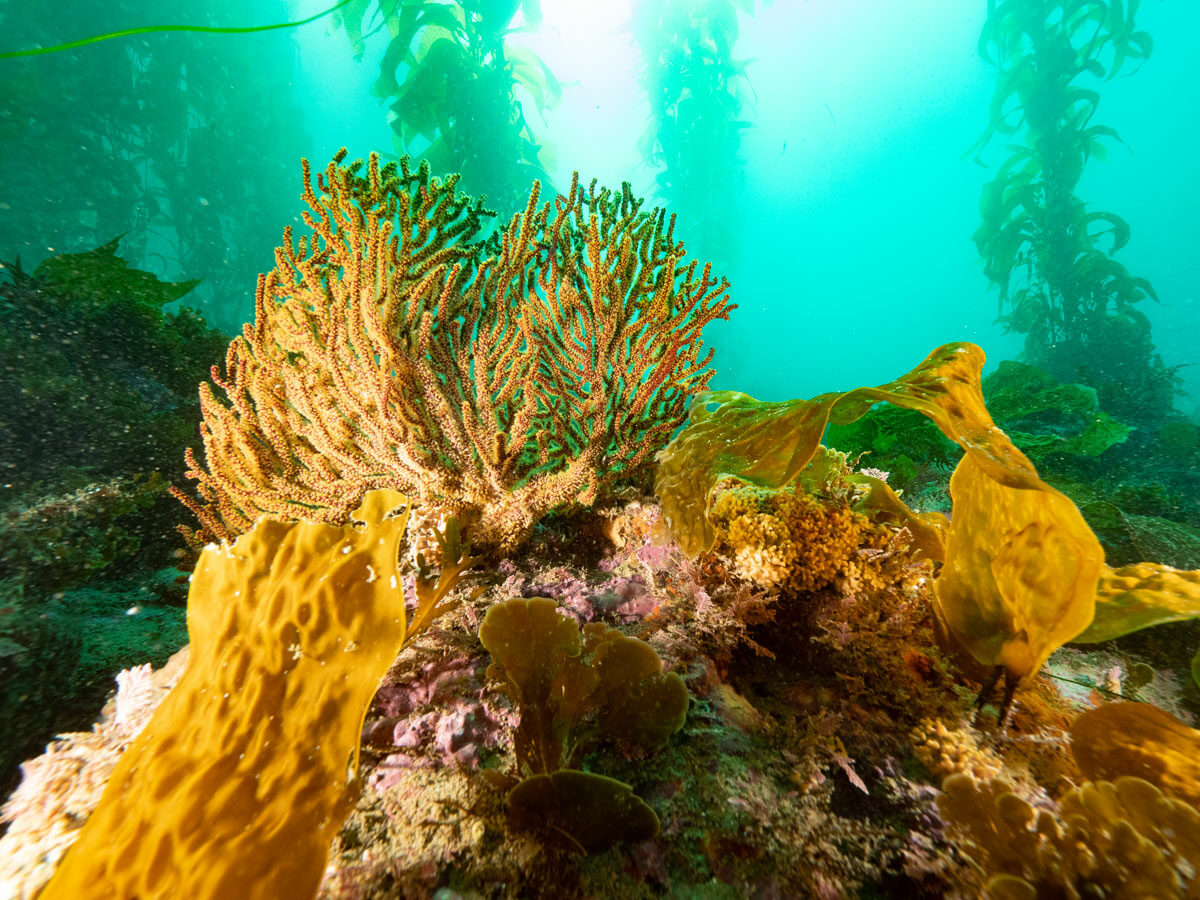
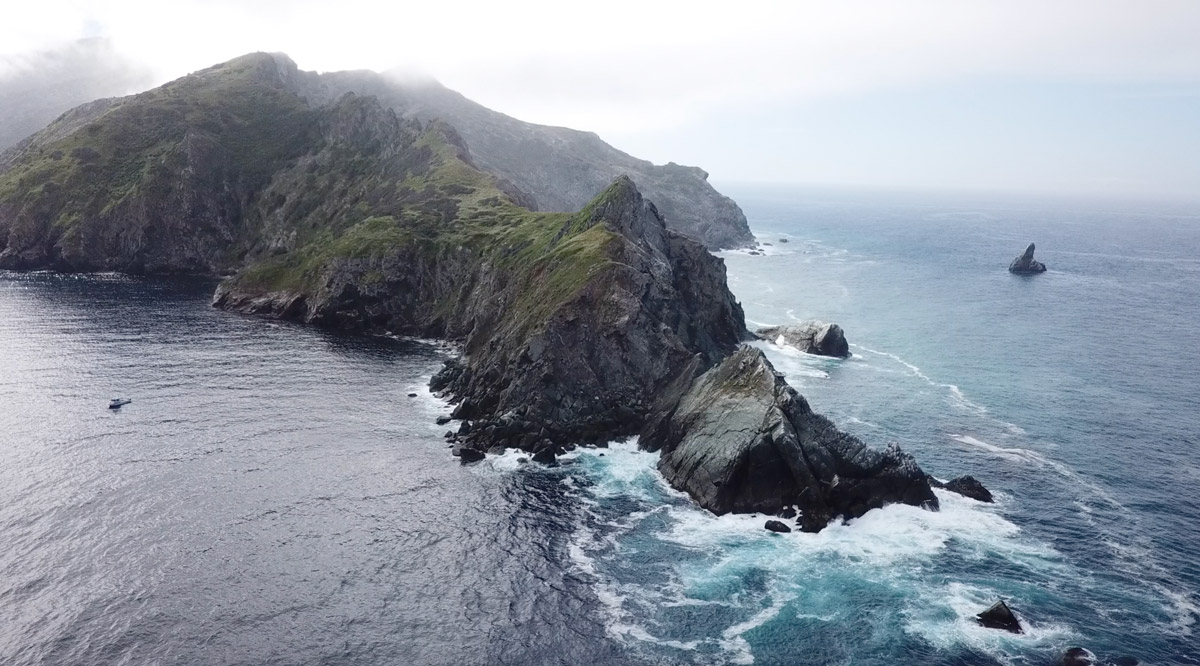
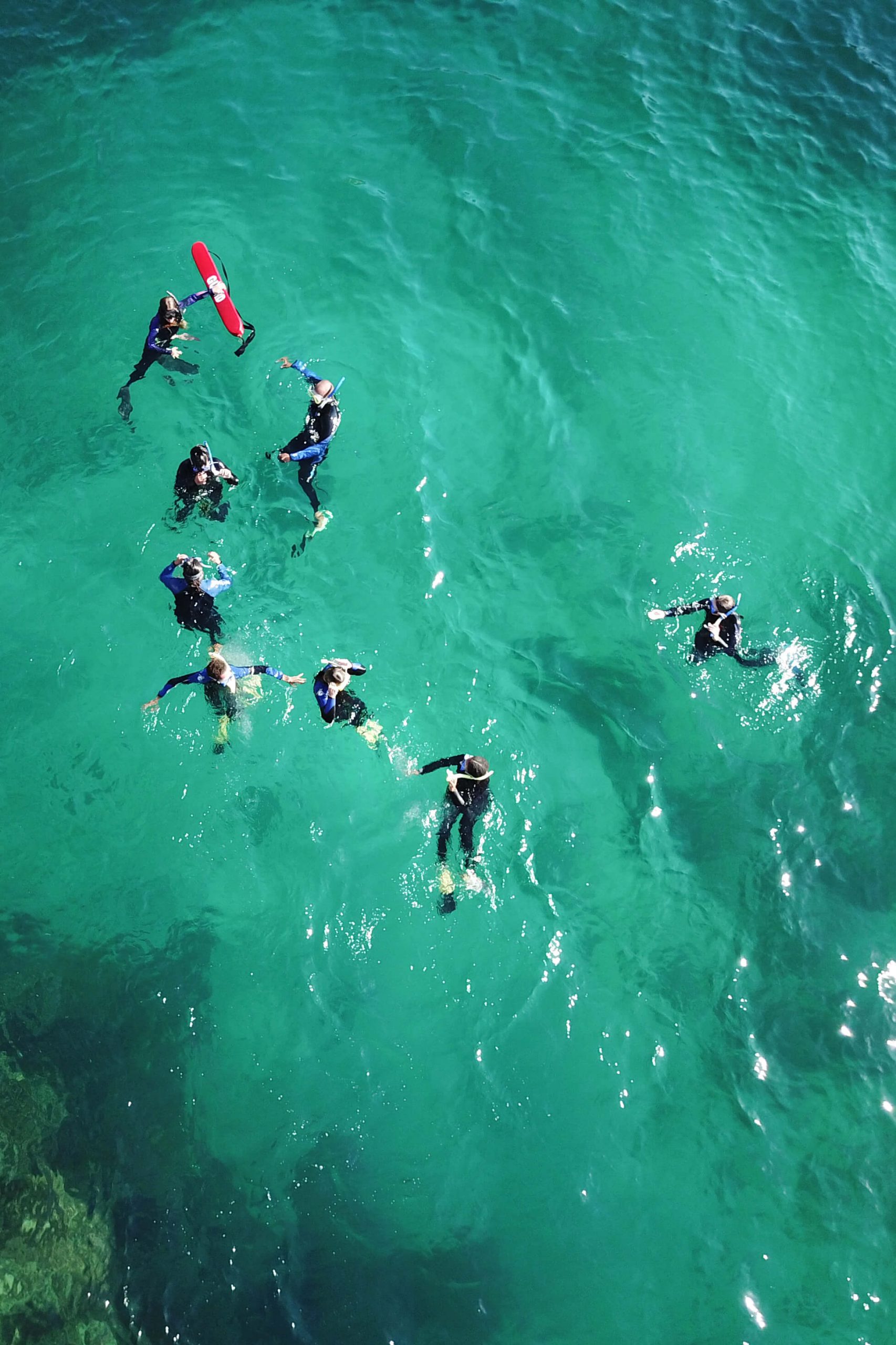
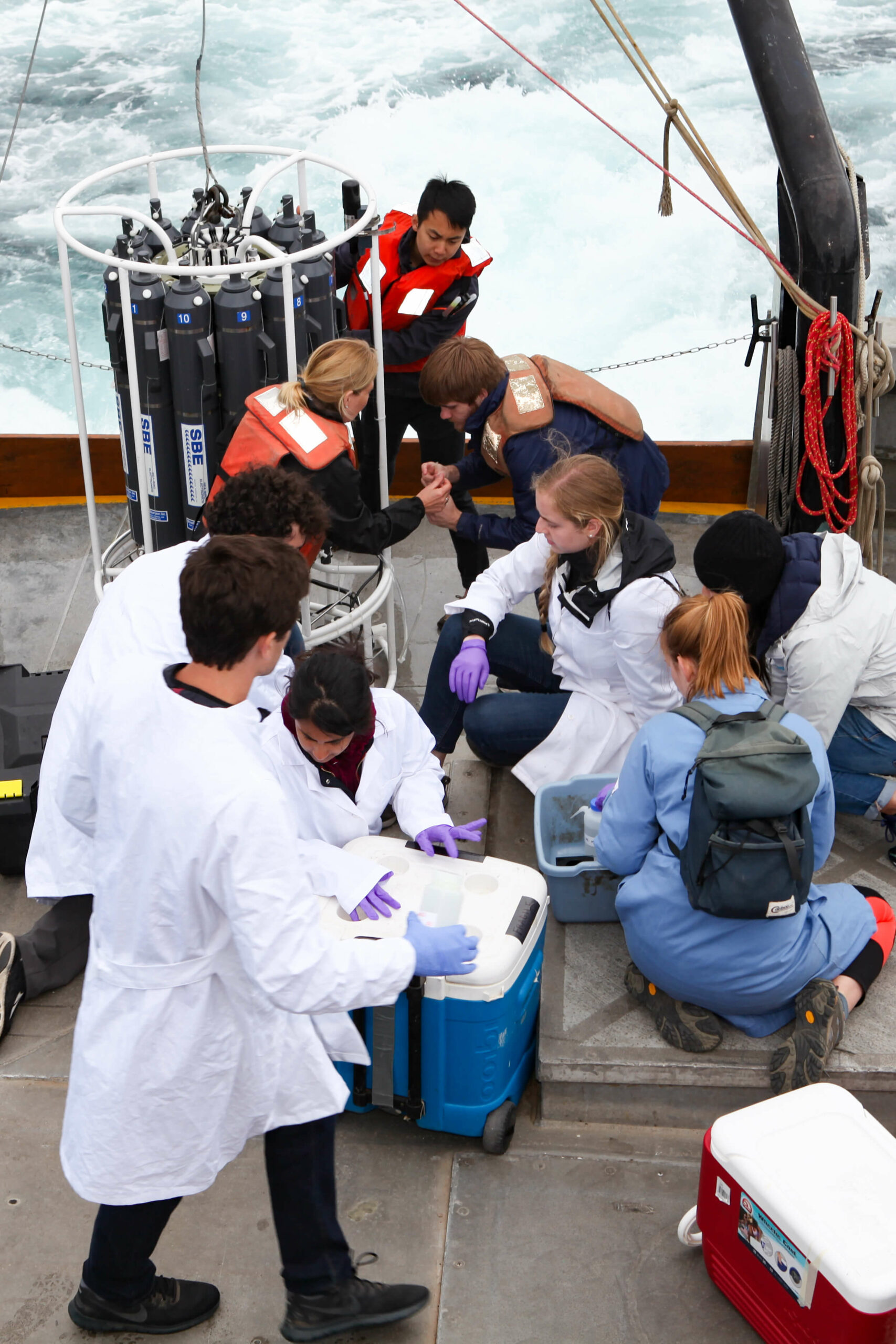
Just 22 miles off the coast of Los Angeles is Santa Catalina Island, known by some as Pimuu’nga or Pimu. It is one of the eight Channel Islands and the only island with a permanent human presence. Today, the island is surrounded by nine marine protected areas, two of which are the Blue Cavern Onshore and Offshore State Marine Conservation Areas. These areas work in tandem to safeguard 10 square miles of marine life, from the shoreline through kelp forests and rocky reefs to the sandy seabed as deep as 2,616 feet. Every year, researchers and students work and learn together along this protected marine area at the nearby Wrigley Marine Science Center, the satellite campus of the University of Southern California’s Wrigley Institute for Environment and Sustainability.
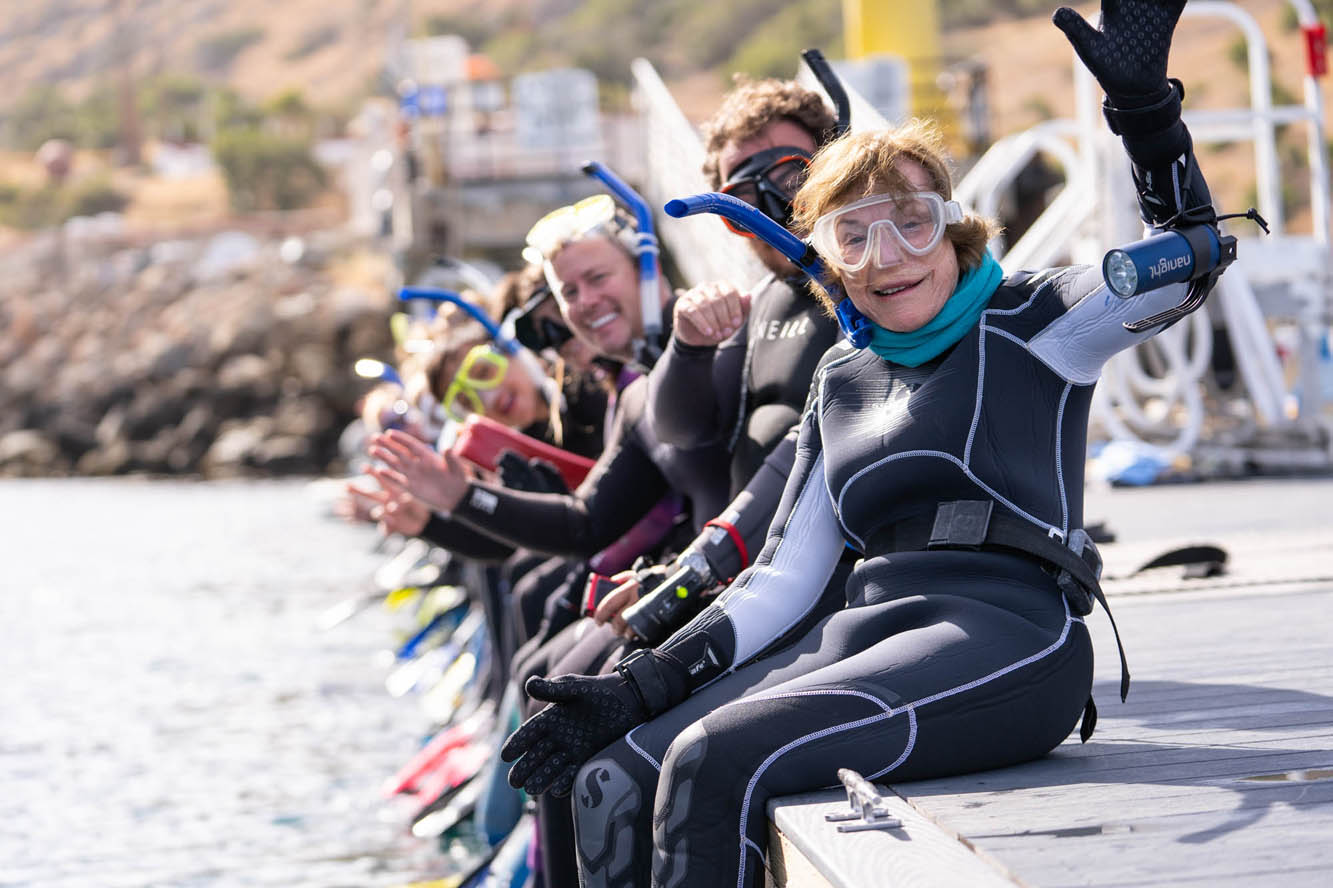
International marine conservation nonprofit Mission Blue has named Blue Cavern State Marine Conservation Area a Hope Spot in recognition of what Dr. Sylvia Earle, Founder of Mission Blue, describes as “an example of the successful steps society has already taken to protect ocean ecosystems and an impetus to work together in expanding these protections and further advancing similar efforts; a model for the rest of the world.” She congratulates the USC Wrigley Institute for Environment and Sustainability for its programs that are creating the next generation of dedicated ocean stewards.
Jessica Dutton, Executive Director, USC Wrigley Institute for Environment and Sustainability and Hope Spot Co-Champion says, “This new Hope Spot is more than a place, it’s an experience. Students and researchers create core memories of their time at USC during their visits to Catalina Island.” She describes alumni who attended an island-based program 20 to 30 years ago and still fondly recall it as a “watershed moment” that cemented their paths in environmental studies. “For others,” she says, “it opened their eyes to realize, first, that there’s this marine life so close to home, and, second, the reasons they ought to care deeply about it.”
The USC Wrigley Institute’s Marine Science Center, a vibrant campus on the shores of the Blue Cavern State Marine Conservation Areas, hosts hundreds of researchers and more than 1,000 undergraduate students annually. Programs focus on interdisciplinary studies and hands-on education with cutting-edge technologies and virtual connections to mainland Los Angeles and around the world. A signature education program today is the Catalina Residential College, where students participate in immersive summer courses that investigate the intersection of people and the planet. Classes take advantage of the unique coastal setting to study Catalina Island’s natural systems and their complex relationships with humans. The campus also hosts prominent speakers every year, including Dr. Earle, who met with students and faculty in May 2022 and gave a plenary talk on the importance of ocean conservation and her experiences as a pioneer in diving.
The Wrigley Marine Science Center (WMSC), USC Wrigley Institute for Environment and Sustainability’s satellite campus, is situated in a unique location that makes it ideal for research and educational activities–but that location also poses some special challenges for the campus’s operational sustainability. Now, a collaboration between the Wrigley Institute and USC’s School of Architecture is providing students with hands-on research experience while also helping to solve one of those sustainability challenges.
WMSC is situated at the edge of Big Fisherman Cove, a “no-take” marine protected area (MPA) where human activity is regulated to conserve biological diversity and provide a sanctuary for marine life. The cove is also an Area of Special Biological Significance (ASBS), meaning that it is heavily monitored by the state to ensure that water conditions remain pristine.
Given that the facility is in an ecologically important location, a significant part of Lauren Oudin’s role as the Wrigley Institute’s scientific operations manager is to implement best management practices to ensure that the cove continues to meet state requirements, despite the busy schedule of activities that take place at WMSC.
Beyond ensuring sustainable operations, Oudin and the Wrigley Institute team face another significant challenge: Catalina Island has abundant naturally occurring metals that bind to the particulates in the native soils. Especially when the campus experiences heavy rainfall, water that flows through WMSC’s Green Ravine (a rocky culvert that cuts vertically through the middle of campus) can carry those sediments down to the cove, potentially affecting water quality in the MPA and ASBS.
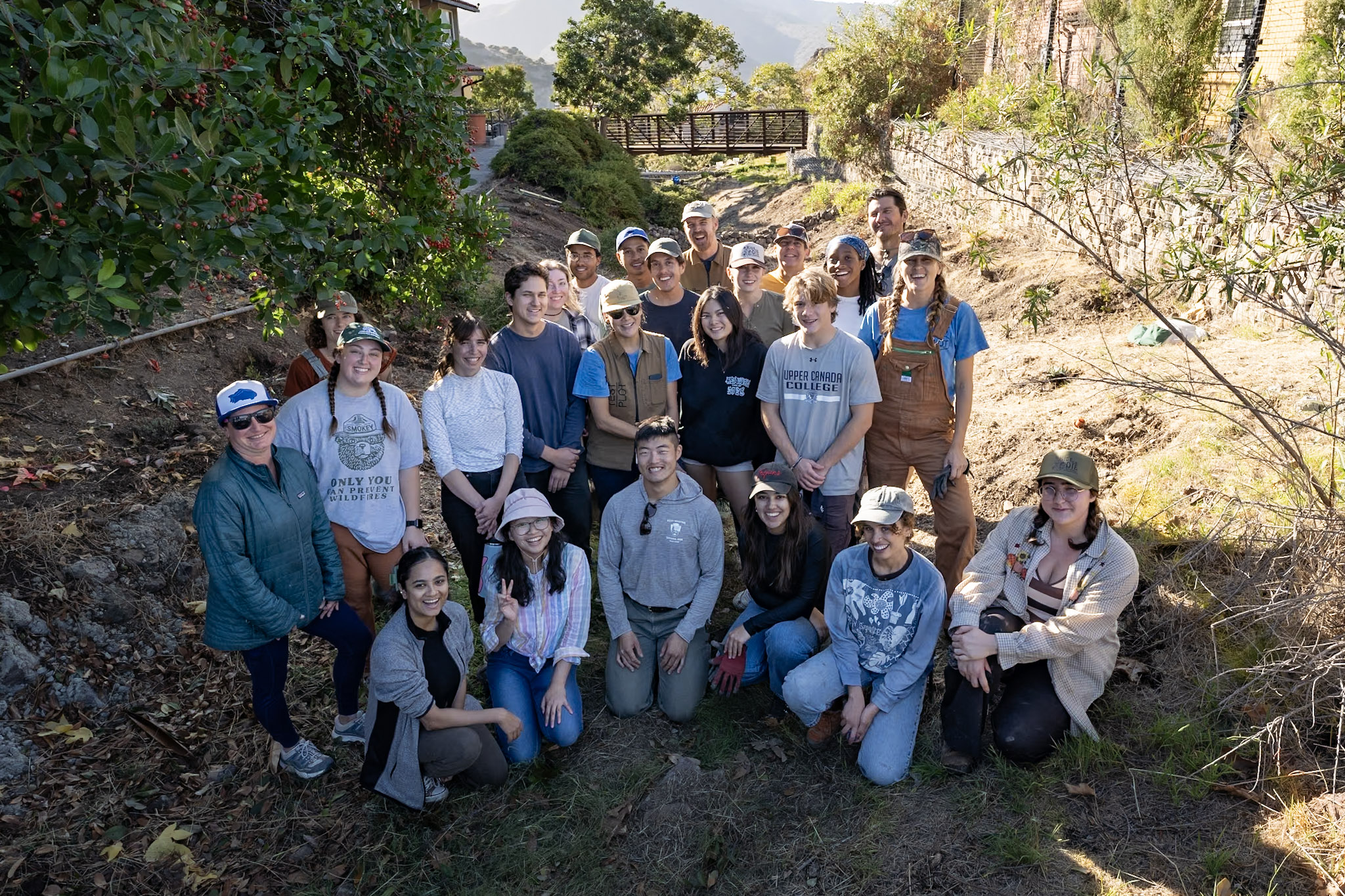
That’s where Test Plot, a community land-care initiative under the Landscape Architecture + Urbanism program at the USC School of Architecture, comes in. This fall semester, the Wrigley Marine Science Center’s Green Ravine was the focus of an experimental, project-based Test Plot class led by associate professor and landscape architect Alexander Robinson. Throughout the semester, Test Plot students surveyed the site, conducted interviews with stakeholders, and co-designed ways to reinvigorate the Green Ravine with native plants donated by the Catalina Island Conservancy to help address the challenges facing the campus.
“A lot of times, wild plants don’t necessarily fit the sanitized ideals of what’s considered beautiful. In the quest to expand more drought tolerant and native plants, we really need community buy-in,” said USC environmental studies (ENST) student Olivia Heffernan. “It’s important to bring people in, have them engage with wild plants and be around their natural beauty, and learn to appreciate them.”
Since fall 2021, Associate Professor (Teaching) of Environmental Studies, Political Science and International Relations Shannon Gibson has shepherded a small group of USC students through the annual United Nations Conference of the Parties (COP) on climate change. The conference brings together a wide variety of people–heads of state, high-ranking policymakers, media, activists, and more–to address the impacts and root causes of climate change and work toward solutions. It culminates each year in a unanimous treaty (usually referred to as an agreement) that lays out next steps for participating nations.
This year’s agreement included language calling on all parties to reduce greenhouse gas emissions by “transitioning away from fossil fuels in energy systems, in a just, orderly and equitable manner, accelerating action in this critical decade.” The language was milder than that favored by many policymakers and activists, but still marks the first time a COP agreement has explicitly recognized the need to eliminate fossil fuels from the international energy system.
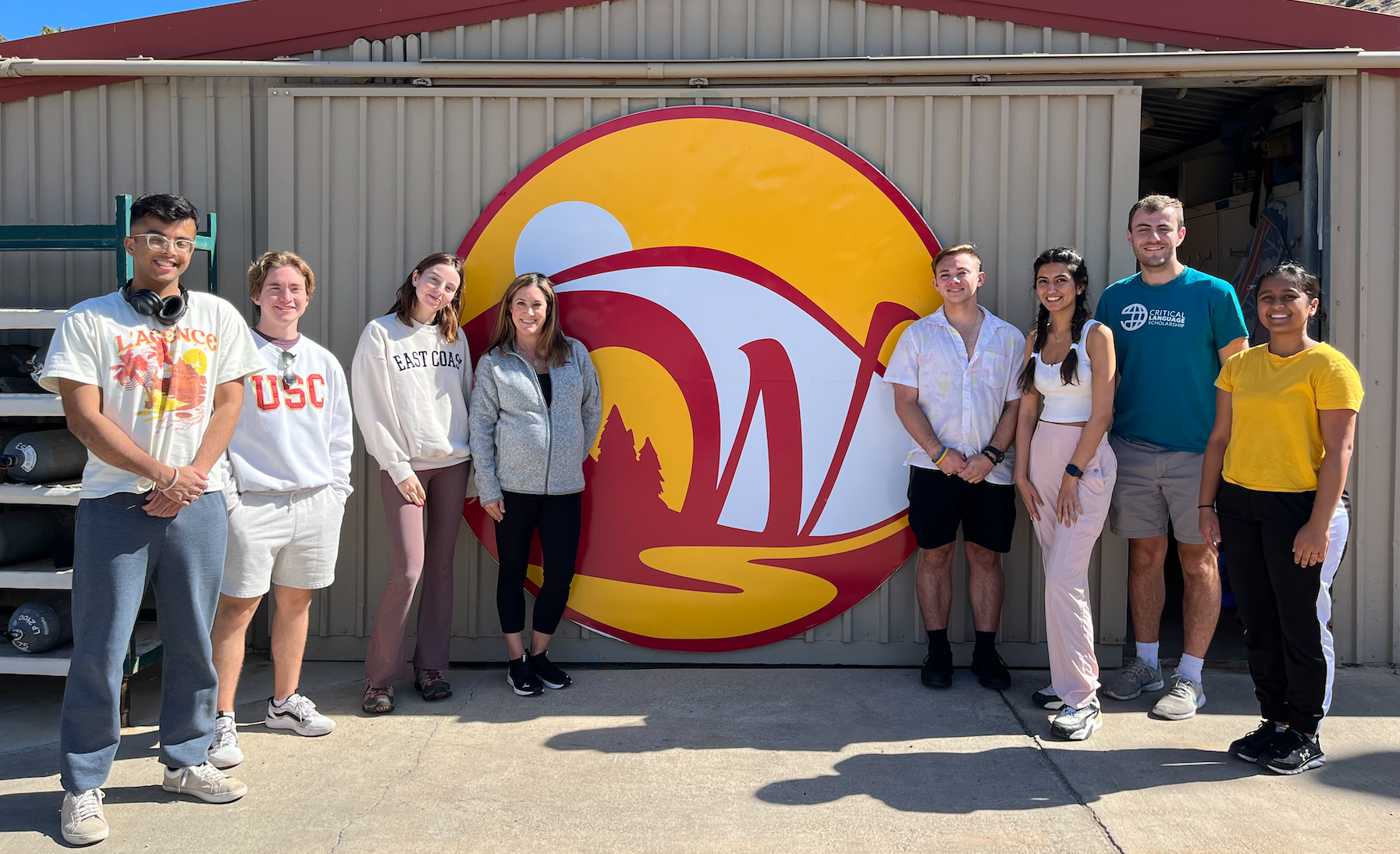
This year was also remarkable for Gibson and her students, as it marked the first time that students could participate in COP as part of a for-credit course, ENST 499 Global Climate Negotiations: Policy Research and Communications. Developed with support from a USC Wrigley Institute for Environment and Sustainability Teaching Innovation Award, the course organized graduate and undergraduate students into research clusters around the topics of civil society (i.e., climate activism), climate finance, and climate change mitigation.
Make Your Impact
Your gift to the Wrigley Institute for Environment and Sustainability provides opportunities for our students and supports world-changing research for the planet.